Tuesday, December 31, 2013

Teenage Mutant Ninja Turtles: My Look at the Cartoon Series

I love Teenage Mutant Ninja Turtles (TMNT), and with the new(ish) series that came out in 2012, I wanted to do a blog post about my favorite turtles!!

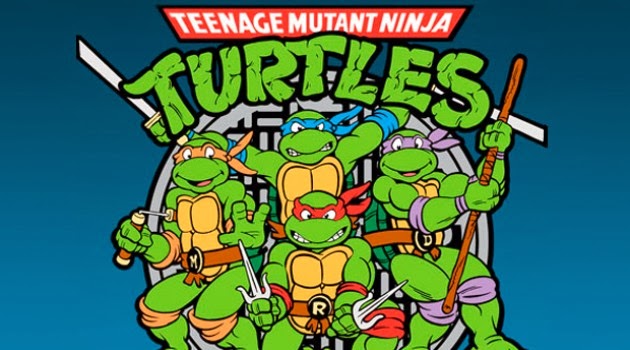
TMNT 1987. Source: unboreddiva.com
If you think about it, the story of TMNT is actually pretty insane. Four baby turtles and one rat get mutated by a glowing ooze, and then the rat raises them as his sons and trains them in the way of ninjutsu. They live in abandoned ruins in the sewers of New York and fight against their powerful and dangerous foe, the Shredder, a man who has a talent for ninjutsu and a vicious nature.

 Sounds crazy, right? When I was trying to explain the story to one of my friends, her incredulous look told me just how insane the story really is. It's amazing that this franchise got the fan base that it has.

I first got into TMNT when I was twelve/thirteenish and came across the 2003 cartoon series that aired on Saturday mornings. I was a little familiar with them since my older brothers had tons of action figures, but I didn't really know all that much about them. I got hooked on that show immediately and loved it. For a long time, I thought that was all there was to TMNT. Well, I knew there was a previous series but I didn't know much about it.

Wednesday, October 30, 2013

The Genius Behind the Insanity of the Joker

I was having difficulty falling asleep one night, which often leads to me thinking about random things. I had been contemplating the character of the Joker, particularly the Heath Ledger version in The Dark Knight and that night I came to a bit of a realization. Here it goes!

Source: http://www.smscs.com/photo/
heath_ledger_dark_knight_wallpaper/36.html#.UnF_DJTTWMU
Throughout the movie, the Joker was all about chaos. Batman was trying to figure out the Joker's motive and what made this movie so interesting is that the Joker didn't seem to have a motive. He wasn't in it for the money or power; he just wanted to cause chaos. This is something that he practically preaches to everyone he meets and it's what he uses to drag Harvey Dent down. The Joker loves chaos, so much that he claims to be the embodiment of chaos. It seems to fit him so well, causing us to look at the Joker and think "he's crazy." But the Joker's not crazy. At least, he's not crazy in the way we assume, in that he's a psychopathic killer who's only in it for the thrill of chaos. In reality, there's another layer to the Joker behind his chaos theory and his insanity.

The truth is that the Joker is an embodiment of control and manipulation. The Joker doesn't live for chaos. Rather, he lives for control under the guise of chaos. From the very beginning, the Joker had everything and everyone under his control. He knows just how to manipulate someone to get them to do what he wants them to do while they are thinking that they are doing it for their own reasons. The minute we meet the Joker, we can see that he knows how to get under someone's skin, how to push just the right buttons to make that person snap or do what he wants them to do. And they don't realize they're playing right into his hands.

For example, whenever the Joker is telling someone the story of how he got his scars, the story changes with each person that he tells. One might think that he is changing the story because it's chaos and it shows his insanity, but that's not true. He tailors his story to each of his victims to get the desired reaction from them, from fear to disgust. It creates this possible reflection of his victims and himself. He tailors his story in order to gain more control over the victim.

The more I think about it, the more this idea makes sense. The Joker couldn't be crazy, at least not completely. He was much too smart for that. Granted, it's true that his psyche was off and that there was something wrong with him. He could be psychopathic and a control freak, but irrationally crazy? No way. Everything he did leading up to his ultimate triumph in the movie (bringing down Harvey Dent) was something he was in control of from the very beginning.

Source: http://protagonist.wikia.com/wiki/Batman_(Christian_Bale)
A good illustration of this control is when Batman is interrogating the Joker. Here, the Joker showcases and even points out his control over Batman. He toys with Batman and tries to get inside his head,  but when he realizes that's not working, he tries a different approach. He uses other people, namely Rachel. That's when Batman snaps, and that's the moment when he loses that battle to the Joker. You can tell by the way the Joker is laughing that he's won. He even says to Batman, "you have no power over me, you can do nothing to me." He emphasizes this element of control by escaping the police and telling the Batman the wrong addresses for Harvey and Rachel. He knew that Batman would go after Rachel so he gave him Harvey's address because he knew Batman would get there before the police could reach the other one, thus leading to Harvey's fall. The Joker was in control from the very beginning.

Another interesting fact is that during the whole movie, the Joker denounces the idea of plans, which is marked with his famous saying, "Do I look like a guy with a plan?" And yet he works to a plan. What's different is that his plans are fluid. He can change them in an instant because he understands people well enough that he can manipulate them into his new plan. Even while one "plan" fails, the Joker already has another one in the process. He doesn't particularly care if they succeed, because he has another idea already happening. A good example of this is the events after the Joker gets "captured" by the police leading up to the death of Rachel and the downfall of Harvey Dent. It's not certain whether the Joker had this plan of bringing down Harvey the whole time, but it seemed that he was building up his plans, little by little as the events unfolded. This is what made him so successful. Whenever something may not go according to his original plan, he merely modifies his actions to suit a different plan that's already halfway through the making.

Honestly, this combination of the Joker's fluid plans and his extensive understanding of people is kind of scary. He knows exactly how to push at a person to get the reaction he desires. From a desperate cop to a mob leader to Batman himself, the Joker understands immediately how they all work, what motivates them, and why they do what they do. He then takes that knowledge and uses it for his own plans. The Joker is not just some insane criminal that the Batman has to take down. He is a social genius and a master manipulator who almost brings Gotham to its knees.

So why does no one pick up on this? Why didn't I pick up on this when I watched the movie? I've seen it several times and I'm just now realizing the full extent of the Joker's genius. Maybe because like everyone in the movie, I assumed that the Joker really was about chaos and he really was insane to an extent. I think that was his biggest tool. People didn't take the Joker seriously (word choice fully intended). They assumed that he was a nut job, or that he didn't really have a plan. But he did, and he accomplished his plan while simultaneously making everyone believe he was a psychopathic nut that just loved chaos. But in reality, he was a lover of controlled chaos in which he's the one pulling the strings. The Joker pulled off the biggest lie of the century right under everyone's noses. To me, that's the most frightening part about the Joker in The Dark Knight, and it's also what makes the movie so poignant and, well, beautiful.

Well, that's all I have to say about the Joker for the moment, though I will probably be doing more posts about him in the future. He's an endlessly fascinating character and it's very fun to analyze him and his interactions with Batman. But until then, here's another picture of the Joker, because he's just that awesome!

Source: http://villains.wikia.com/wiki/Joker_(The_Dark_Knight)?file=THE_JOKER.jpg

Until next time, folks!

Wednesday, July 17, 2013

Beginner's Guide to the World of Japanse Anime

Sorry about the huge gap between postings! I got distracted with other things and I didn't have anything that I thought was post worthy yet. But apparently I'm still on an anime kick. I thought of this post after talking to people and realizing that many people don't know much about anime. Since Japanese anime is an extensive category, many people get a little lost when they're first venturing into this genre. So this post is a guide for those who are interested in Japanese anime, but don't know much about it, or aren't sure where to start in watching anime. I'll be giving you a series of tips that will help you understand better the genre of Japanese anime and know what kind of shows you would be interested in watching. Here are the following tips when immersing yourself in the world of anime.

1. Understand the Culture of Anime

Let's start with a simple definition of Japanese anime, which is an animated show created in Japan. Yet the style of Japanese anime itself has become a set style and genre in the entertainment world that extends beyond Japan. However, Japanese anime is more than just a genre of TV shows. It is a form of culture for Japan, and it displays different elements of Japanese culture. One such element is the style of humor. Generally, Japanese humor has a tendency to be over the top, dramatic, and a bit zany. It's definitely different from what you may be familiar with and may take some getting used to. When things do seem a little crazy in a show, just remember that it's the Japanese style of entertainment.

2. Subbed or Dubbed?

Before you even start watching anime, you should decide one thing from the beginning, which is whether you are going to watch the shows subbed or dubbed. Let me explain a little further: Since most Japanese anime is done in Japanese, there are two options for us English speakers. The first option is that we can watch shows with the Japanese voice actors and read the subtitles (subbed). The other option is that we can watch shows that have had English voice actors dub over the Japanese ones (dubbed). Personally, I recommend watching anime shows with the Japanese voice actors, mainly because the English voice actors tend to be a little flat and sometimes part of the meaning gets lost in the translation to English dubbed. Plus, watching it in Japanese introduces you to a bit of the language. However, if you don't like having to read subtitles while watching TV, then English dubbed is the way to go. Just keep in mind that some anime shows might not be available with English voice actors.

3. Where to Watch?

This is a big question of many first-time anime viewers. There are a few shows available on youtube, but the quality generally isn't very good. I have three websites that I recommend, which are hulu.com, vizanime.com, and crunchyroll.com. These websites have a great selection of anime shows. There are other websites and myspace pages that post episodes of various shows, but I would be very careful, since some of these websites can give your computer viruses. One website that I've used that seems relatively safe is animefushigi.com, but like I said, be careful. Another thing is to avoid downloads, since that is illegal. If you really like a series, you should buy it!

4. This is Not a Kid's Show

This is probably the biggest trap that first-time anime viewers fall into. Most people assume that if a show is animated or is a "cartoon," then it will be kid-friendly. However, many Japanese anime shows can have very adult situations. They can be violent, bloody, intense and have nudity or sexual scenes. I've had many friends who told me how their one and only anime experience was of a terrifying show that wasn't kid-friendly. Of course, there are kids anime shows that are perfectly safe to watch. The trick is to just be careful when choosing anime for yourself or for kids. Just like any genre of entertainment, while there are many wonderful anime shows, there are also many trashy ones.

5. Know the Genres

While Japanese anime is technically a genre itself in the world of entertainment, it is split into several different sub-genres as well. There are the usual genres, such as Fantasy, Science Fiction, Comedy and Romance, but there are a few genres unique to Japanese anime. These genres include Mecha, Steampunk, and Slice of Life. It's important to know what type of genres you might like, since that will ease your transition to anime. Now I'll go into detail in each genre that I've mentioned and give you a few possible shows that you might enjoy. Keep in mind that many anime shows will have multiple genres, just like other TV shows do.
  • Fantasy- This genre in anime usually involves magic, or characters with special powers. It's not that different from the usual fantasy genre, although a lot of shows have ninjas. Some shows I recommend are: Avatar the Last Airbender, Naruto, Bleach, Sword Art Online, Inuyasha, Fullmetal Alchemist: Brotherhood, One Piece, Ghost Hunt, Vampire Knight, and Mushi-shi.
  • Science Fiction- This genre has a lot of robots and a fascination with space and aliens. Some shows I recommend are Cowboy Bebop, Trigun, Ergo Proxy, Ghost in the Shell: Stand-Alone Complex, and Eureka Seven.
  • Comedy and Romance- these two genres tend to go together in many anime shows. A note about romantic anime shows is that they are a bit more dramatic than what you may be used to, so just bear that in mind. I personally find them very powerful and enjoyable to watch. Some shows I recommend are Waiting in the Summer, Ouran Highschool Host Club, Emma: A Victorian Romance, Fruits Basket, His and Her Circumstances, Kaichou Wa Maid Sama, Kimi ni Todoke, and Honey and Clover.
  • Mecha-this genre deals mainly with robots and crazy futuristic ships and suits. Some shows that deal mostly in this genre are Code Geass, Eureka Seven, The Vision of Escaflowne, and Guilty Crown.
  • Steampunk- This genre deals mainly with the Victorian age and futuristic technology that works with steam engines and intricate gears. It's a fascinating genre that can be incredibly visually appealing. Some shows I recommend are Steamboy (which is technically a movie, but still great), Fullmetal Alchemist: Brotherhood, and Howl's Moving Castle (another movie).
  • Slice of Life- this is an unusual genre and it is often paired with Romantic animes, but I find it refreshing. It mainly deals with everyday occurrences of people and the ordinary elements of life that may not be deemed as interesting. If done right, this genre can be incredibly beautiful. Some shows I recommend are Honey and Clover, Bunny drop, His and Her Circumstances, Kimi to Boku, My Little Monster, and Kids on a Slope.
  • Easy for First-timers- this is my own category of shows that are essentially American but have elements of the Japanese anime style. I included this category for those who would like to ease into anime more slowly. These type of shows are ideal for first-timers because they still have familiar American elements but they also have that Japanese anime influence. Some shows I recommend are Avatar the Last Airbender, Teen Titans, Digimon, and Pokemon.
  • Kid-Friendly- There are anime shows dedicated to kids that have great storylines. some shows I recommend are Digimon, Pokemon, Sonic X, and Avatar: the Last Airbender.
So that's my Beginner's Guide to Watching Japanese Anime. Just remember that if you find that you don't really like the Japanese anime style, that's just fine. It's a unique style that some people really enjoy and others don't. Welcome to the world of anime! Here's a cool picture of various anime characters! 
Ha ha I recognize and can probably name the majority of these characters. Yep, I'm an otaku.   Source: bluedevilxreddevilx on deviantART

Friday, March 8, 2013

Ninja's, Steampunk, and Other Strange Things in the World of Anime

Everyone has that one hobby that they can't reveal to their friends, for fear of being mocked for the rest of his or her life. This is usually a big deal in high school since everyone is worried about their image and no one wants to stand out in a bad way. The only socially acceptable ways to stand out in high school were in sports, theater, or schoolwork. People just didn't talk about their hobbies that were considered "different." I'd like to say that I was the exception to this phenomenon and that I didn't care what people thought about me, but that would be a complete lie. I was just as self-conscious as the other students in high school. In general, I didn't really have any particularly weird hobbies; I danced, did theater, and was a good student. Yet there was one hobby that I couldn't tell anyone about. You probably guessed it from the title, but my secret hobby was watching Japanese anime.

Anime is a type of entertainment that can have a polar effect on people. Most people that encounter anime either love it or hate it (or they walk away thinking "what was that?").  The reason behind this is probably because we're not only dealing with a different style of entertainment, but also a different culture of ideas and expectations. The Japanese style of animation and humor can be overly dramatic, completely over the top and crazy. So to the Western culture, the Japanese extreme style can come across as incredibly cheesy and weird.  As far as humor goes, Japanese anime humor is both zany and a bit bizarre. To those not accustomed to the style, the humor would be seen as confusing and strange. However, this also depends on the person and what kind of humor they like. I've always been a fan of the odd and zany humor, so when I discovered Japanese anime, I fell in love with this style immediately.

Why do I love anime?  Besides liking the style of humor, I don't really have a straight answer for that.   Even back then, I couldn't explain why I loved those strange and funny cartoons. I just knew that the shows I watched resonated with me. One reason may be that I've loved all types of cartoons since I was a little kid. I was always drawn to animated shows and movies. This love was likely born from constantly watching Disney animated movies. I believe my earliest exposure to Japanese anime was when I started watching Saturday morning cartoons. The local channels on our TV had a few anime-influenced shows. Cartoons such as Shaman King, Sonic X, Digimon and Pokemon filled my imagination with awesome monsters fighting each other and a wide variety of funny characters. I have a soft spot for Digimon, since it was probably my first encounter with the anime style, even though it was in English. There was also shows like Teenage Mutant Ninja Turtles (the version that came out in 2003), Teen Titans, W.I.T.C.H, and Code Lyoko. All of these TV shows helped me to gain a love of stories and characters, something I've been using today as I write my own novels. These shows also likely helped me to develop my love of zany humor.

 However, while these shows had Japanese anime elements, they were all American influenced and not strictly Japanese (Code Lyoko was actually French-based). I was exposed to authentic Japanese anime when I was about thirteen and discovered Naruto. It had started airing on Cartoon Network, and I watched an episode out of curiosity. I immediately became hooked. I loved everything about Naruto: ninjas with incredible powers and attacks, brutal fights, and characters going beyond their limits to protect those precious to them. This anime was different from the other shows that I had watched, in that it was more serious and even showed some blood, something I hadn't really seen in the previous cartoons. Of course, there was still plenty of humor, but the plot and the character development was intriguing to me and kept me waiting for the next episode. Naruto showed me that there were anime shows out there that could be entertaining and serious: shows for teenagers/young adults. Naruto was also the first anime show that I watched in Japanese with English subtitles, which led to my love of watching anime with the original Japanese cast. After Naruto, the world of anime was opened up to me and I dived into it with a gusto.

So I had a new love, a hobby. However, I couldn't tell anyone about it. I knew that anime was considered weird to the general populace, likely due to the expectation that cartoons were meant for kids. The notion of teenagers watching semi-serious cartoons was just weird. I knew that those people who did like anime were often social outcasts in school, and frankly, a bit strange themselves. While I didn't have much desire to be popular, I knew that talking about anime openly would potentially result in a lot of  ridicule that I just didn't want to deal with. I also knew that if someone asked me why I liked anime, I wouldn't be able to answer that question without sounding like an idiot. Besides, I had several other interests, and my love of anime was just one aspect of me. It was easier to simply keep this new hobby a secret, which I did all throughout junior high and high school. Even on those personal surveys that asked about my favorite TV shows, I would always put down a couple of well-known shows that I had seen and liked. But I could never put down my actual favorite shows because I was too afraid to show this part of me that was relatively new. I guess I was too afraid of what people would think if they knew.

When I was fourteen, I did find someone to share my anime hobby, and it came in a surprising form: my brother, Brant. My brother is 7 years older than me, so we weren't incredibly close when I was younger. I mean, we loved each other, of course, but we didn't really have anything in common. One day, I was watching an episode of Naruto when I heard Brant come in. I braced myself for the ridicule of my choice of entertainment, which I saw as inevitable. To my surprise, Brant said, "Hey, I've seen this show. It's Naruto, right? I like it!" I stared at him in shock, completely caught off guard. We ended up watching a Naruto marathon, laughing at the humor and holding our breath through the intense scenes. Afterwards, I was surprised to discover that Brant watched anime too and had seen several other shows. Since then, we've traded different shows, showed each other hilarious internet videos and have grown much closer. I found out that he and I have the same sense of humor, in that we both love the zany and odd humor. Now, whenever we see each other, we usually end up talking about the latest anime shows that we've seen and quoting our favorite lines. It's rather funny that anime brought us together. Who would've thought?

Once I graduated from high school, I found myself being a bit more open about my love of anime. This stemmed likely from my increased confidence and the fact that I was no longer part of the cliques and drama surrounding high school. As I went to my first year of college, I found out that one of my roommates also loved Japanese anime. We talked for hours about our favorite shows, ranted about stupid characters, and squealed over which guys we thought were the hottest. She also introduced me to manga, the Japanese comic book (many anime shows are based on their manga counterparts). She also shared with me her love of crazy Japanese and Korean music. Basically, college helped me to not be afraid to show this part of myself. As I tentatively shared my love of anime, I discovered other people who like it. Of course, the fact that I go to BYU may help this matter, since we're all geeks here.

So now, I share my love of anime with pride. I plaster the walls in my room with anime posters, which was something I had never dared to do before. I talk to others about anime and share my favorite shows. And now here I am, writing about it. I still have plenty of friends and my roommates treat me like a (relatively) normal person, though they do tease me that I have a specific laugh when I'm watching anime.  I don't know what I was so worried about before. I've noticed in general that this is something we all hopefully learn as we get older. At college, I've noticed more people are open about random hobbies that they have. It's no longer bad to like something out of the ordinary. In fact, people don't really care whether you like Pokemon, or anime, or Jane Austen, or dressing up in medieval clothes and sword fighting (they really do have a club for that); as long as it's something that you enjoy, then that's great!  I suppose I was just so scared of what other people would think, but I've realized now that it shouldn't really matter. My love of Japanese anime is a part of me, and if people can't accept that, then it's their loss. I'm proud to be me!
Friday, December 28, 2012

Oh, The Things You Learn at College . . .

I have another list! This is a list of the things I've learned since coming out to college at BYU. Some are BYU-related, while others apply to college in general.

15 Things I've learned while at BYU/College: 

1. The ground floor of buildings is almost never the 1st floor. It's usually the 2nd or 3rd.  
2. When it comes to roommates, privacy, peace, and quiet are all practically nonexistent. 
3. It's always good to know all of the computer labs and printing locations on campus.
4. Be prepared for all sorts of weather, be it rain, snow, or hail in one day. 
5. Caffeine is my friend, even though I can't get it on campus.  
6. Going to Sacrament Meeting in the same room that I had a science class in is both interesting and slightly disturbing.
7. Navigating the HFAC is like putting together a puzzle. An impossibly difficult puzzle that has pieces missing and other pieces that fit where they really shouldn't.
8. Understanding the HBLL system makes life (and writing papers) infinitely easier.
9. The Memorial Hall in the Wilkinson Center is the best place to take a nap.
10. No matter how many times I walk down Rape Hill at night, knowing that nothing will likely ever happen, I still get a bit nervous.
11. Having neighbors upstairs that are taking a clogging class is possibly the most annoying thing ever.
12. When in doubt, ice cream is always the answer.
13. Sometimes, the best motivator is last-minute panic.
14. Also, sometimes, the best times when inspiration comes is during the wee hours of the morning.
15.And no matter how mild or rough my week was, I'm always glad when it's Friday!!

Wednesday, September 5, 2012

The Dark (Byronic) Knight

Hello everyone!
Okay, so I absolutely love Batman. But most of you know that little fact since you've likely seen my Batman purse, T-shirt, posters, or you may be familiar with my obsession with the 90s series and the new movies. So, in honor of the new Batman movie that came out recently, this post is all about taking apart and analyzing the Dark Knight and comparing him with the concept of the Byronic hero. This will also be an attempt to answer the question of why these characters are so popular.

For those that aren't familiar with literary history, the Byronic hero was created by Lord Byron who lived in the late 18th and early 19th century. This poet was basically the rock star of his time with widespread fame and devoted fans. Even today, his poetry is still widely read and influential. The Byronic Hero is a style of character that Lord Byron created. This character is dark, moody, brooding, and has the outlook of a condemned soul. Many of Lord Byron's characters had these qualities and even Lord Byron himself was known for being rather dark and brooding. This concept of a dark, melancholy protagonist took the world by storm and we see elements of the Byronic hero throughout the evolution of English literature and popular media. Some examples include Mr. Darcy from Pride and Prejudice, Heathcliff from Wuthering Heights, Frankenstein, and various characters in modern media today, particularly the stereotyped "misunderstood bad boy." The Byronic hero may have even been the creation of the saying "tall, dark and handsome."  Eventually, the Byronic hero finds its way to the superheroes, most notably with Batman.

Let's take a look at Batman. He has no superpowers and is trained in a fighting ninja style, including the ability to blend in with shadows and become "unseen". As his alter-ego, billionaire Bruce Wayne, he has unlimited access to technology ahead of its time, as well as billions of dollars to finance his cause. His motivation is shaped by his parents' death and his training. His personality is truly that of the Byronic hero: mysterious, brooding, and full of emotional scars from tragic events. Along with his fighting style, Batman resorts to more brutal actions and scare tactics to get his information, a characteristic that would be controversial. He also relies on darkness itself as a tool for his efforts. In fact, Batman's whole persona and existence is darkness, which is very characteristic of the Byronic Hero. Particularly in the last movie, Bruce Wayne's personality took on a more tragic nature, in that giving up his life became the only solution he could see. This tragic is another notable characteristic of the Byronic Hero.

Batman was the next big superhero after Superman introduced us to the concept of the superheroes. His creation likely stemmed from the desire to create something different. The world now had Superman, the invincible superhero. Now, there needed to be a hero that didn't have the appearance of the classic hero, but still had enough awe-inspiring power/abilities to create the sense of a superhero. They needed a dark hero, a Byronic hero. So Batman was created. In reality, Batman resembles more those detectives from those old detective movies rather than a superhero. You know what I'm talking about: those black and white movies with the melodramatic dames and the cold mysterious private eye who always had something hidden up his sleeve. Again, we see more influence of the Byronic hero in these detectives. Batman then could be seen as a mixture of such a detective and a superhero. So, the Dark Knight is made from the combination of the clever minds and Byronic personalities of the great detectives with the combat skills and vigilante style of a superhero.

But why do people like these characters, and why was there such a craze over the Byronic hero in the 18th-19th centuries in the first place? From what I've studied and read, I think people were looking for a more complex protagonist. In 18th century literature, the protagonist generally was the one with good qualities, or at least with good intentions (whether things worked out well for the protagonist or not is a different matter. Authors do love a good tragedy). But soon, authors such as Lord Byron were looking to expand the protagonist into someone whose qualities may not be society's idea of a good hero/protagonist. With the Byronic hero, people could delve into the darkness of the hero and explore new elements in the protagonist. It's notable to say that at the same time as Lord Byron, American writers Edgar Allen Poe and Nathaniel Hawthorne were also exploring the darker side of humanity and fantasy with their haunting short stories and poems. For them as authors and for us as the audience, darkness and dark heroes are an endless source of fascination because it creates a new complexity in the character. It may also have a bit of that forbidden fruit factor; we aren't supposed to like it, but we do. Of course, there were people who didn't care for this type of hero, preferring the classic hero. But regardless, the concept of the Byronic Hero remained a great influence in literature and modern media.

Now to the question: why is Batman so popular? What draws people to this dark character? We have the same reasons that people were drawn to the Byronic Hero. Just as there were mixed reactions to the Byronic Hero, there were mixed reactions to Batman. There were those who rejected him on the grounds of him not being a "real" superhero since he didn't have any super powers. There were also others who didn't care for his personality and found him too dark to be a good superhero. On the other hand, some received Batman gladly as a new and refreshing character from the usual superhero diet. People liked Batman because he was a dark hero that wasn't afraid to immerse himself in the dark underworld of crime to get the information he needed.

But there is so much more to the concept of Batman than the novelty of a dark superhero. For there were those that could relate to Batman. Batman, though incredibly talented and rich, was still human. To some people, that humanness is what really drew them to Batman. Because Batman was imperfect, he could be more real. He had his own problems and his own demons to sort out. For those people, like me, half of the fun of watching and reading Batman was not only figuring out the crime or seeing how he'd defeat the villain, but also figuring out the Batman himself. Batman became more than a superhero. He became a puzzle, a real human being. Perhaps those very human qualities are the deepest and most frightening reasons for our love of the dark heroes such as Batman; we see a little of ourselves in that darkness. We see someone who isn't perfect and is a little more like us. While he may be powerful and charismatic, Batman isn't untouchable. And through his imperfections, he becomes more real to me as a character and as the Dark Knight.

So why is Batman my favorite superhero? Besides some of my obvious and shallow reasons (he's buff, has awesome ninja skills and has that sexy mysterious air), something about him just draws me to him. Maybe it's those Byronic qualities; maybe it's his human nature.  Regardless of the reason, I love Batman as a superhero and as a character and I probably always will. So go watch the new Batman movie because it's pretty awesome! Or don't. I can't make you do anything. But you'll be missing out. Until next time, folks!


Friday, June 22, 2012

Using Math to Discover the Purpose of Research Papers

Okay folks, I have the link to my latest research paper at the end of this post if you wish to read it. Honestly, I think it's my best one. So my post is about research papers and their purpose in life. For the majority of college students and even the majority of students in my major, writing research papers is definitely not one's idea of a good time. In fact, most of us dread that paper and put it off until the last possible moment, then pull all-nighters to finish that very, very rough draft (and yes, I speak from experience).  But as I learned in my recent English class, writing a research paper takes much more thought, time, and effort than those usual few hours of feverish typing.  Writing a good research paper means asking the right questions and exploring them. It means developing a thesis that not only states something you wish to prove, but leaves room to explore the reasons behind your statement. It means hours of searching through articles to find that one quote to add the right punch to your paper. And it means revising, revising and more revising to get that last sentence to sound perfect.

But even with the right research, the proper amount of time and the dedication, many of us still think, "Why am I writing a research paper? I don't plan on writing these types of papers for a living, so what's the point?" I know we've all thought of this. Even an English major like me has had these thoughts. It's a logical line of reasoning. After all, we go to college in order to learn specific skills so that we can find a good job after graduating. If "writing a research paper" isn't one of those skills that is needed in one's job field, then what would be the point?


This reminded me of  the argument many high school students use to debate the purpose of math. They would say things such as, "I don't plan to have a job where I have to use the quadratic formula, so why do I have to learn it now?" Of course, then the teachers would bombard them with all the different jobs and careers that require some math, which probably still didn't convince many of them. For English majors especially, math is a subject considered relatively useless, but I would argue differently. I say that learning those formulas and different theorems in high school actually did help more than we may think. Yes, I am defending math, the girl who has struggled with and loathed math since she knew of its existence. Despite our  rocky relationship, I believe that math has helped me. However, I feel that it wasn't necessarily the specific skill of solving a formula that proved useful; it was the other skills that came along with learning and doing math. By learning and using math formulas, we learn how to solve problems that seem unsolvable and we learn how to memorize.  By  practicing and struggling through math, we learn to concentrate, focus and backtrack when we make a mistake. I'm sure that any employer would welcome these skills in a prospective employee. 


I believe that it's the same type of learning with research papers. While they aren't very fun to write for most of us, they do help us to learn skills that will likely be needed later on in life. By learning to formulate a strong thesis, we learn to think in different ways.  In researching, we learn how to use various resources of the library and how to differentiate between reliable and unreliable sources. By writing in the formal research style, we learn how to present our subject material in a professional and intelligent manner (i.e. no smiley faces or lols). And by learning the MLA, APA, or Chicago formats, we learn how to write papers in a style that many businesses use, preparing us for jobs that may require us to write a little. Let's be honest, no matter what type of job you go into, you will almost always have to do some writing. And these skills will no doubt come in handy in the future whether you plan on working for a corporation, studying medicine or becoming an entrepreneur.


So there's my opinion. Simply put, research papers are good.  Now I'll just have to remind myself of that fact the next time I'm up late developing my thesis and my research. But I agree that while they can be very frustrating, it's also surprisingly rewarding to see a decent research paper and think, "I wrote that." It gives me a sense of accomplishment and even ownership.  That's probably why I want to be an author so I can feel that all the time. Ha, just kidding. . . maybe. Anyway, don't give up on writing research papers! Until next time! And here's the link: 

https://docs.google.com/file/d/0B5uiRbUNh6bHQTctczR5bF9jZE0/edit